One of the most famous poems by German author Heinrich Heine starts with the following two lines:
Denk ich an Deutschland in der Nacht,
Dann bin ich um den Schlaf gebracht
(“If at night, of Germany I think
No sleep for me, awake I blink”)
Translation by Robert Tucker
At the risk of sounding melodramatic, these lines kept haunting me following the 8 October legislative elections in Luxembourg.
We live in extremely volatile times. Wars and conflicts are brewing around the globe, the disparities between rich and poor are reaching unprecedented levels, and the climate crisis threatens the very survival of the species on this planet.
In times like these, we need leadership that understands not only the magnitude of the challenges we face, but also the systemic and deeply ingrained causes behind them. Ideally, that leadership would also be as diverse and multi-faceted as the society it claims to represent.
Unfortunately, Luxembourg’s electorate chose none of that.
The Return of the Crown Prince
It seems all but certain that Luxembourg’s next government will be a coalition between the Christian Social People’s Party (CSV) and the Democratic Party (DP), led by a veteran of Luxembourg politics – even if he’s tried to convince us that he’s someone new by adding a hashtag in front of his name. #NiceTryLuc.
It must seem ridiculous to Luc Frieden that he had to wait this long to finally assume the position that had basically been promised to him a long time ago. Back when it still seemed as if his party had a lifetime subscription to being in government, Frieden was hailed as the “Crown Prince” of CSV-Patriarch Jean-Claude Juncker. In fact, it seems that at some point, Frieden might have convinced himself that he actually was royalty, seeing as he clearly considered opposition work to be beneath him and preferred to go rake in boatloads of cash in the private economy instead.
So, in these times of late-stage capitalism, when toxic managements grind even the most dedicated workers into burnout and an increasing number of people struggle to afford… well… living, who is the man about to take over?
Let me put it like this: If the “free market” came to life as a person and spent 20 years only reading Thatcher and Reagan scripts while living exclusively off a diet of pure cocaine, it would probably still sound less like a neoliberal than Luc Frieden. It’s quite funny to me that leftists are always accused of being the “unrealistic” ones while people like Frieden somehow still believe that trickle-down-economics are this genius fiscal masterplan that will (probably, maybe, perhaps) work if we’d just try it for the 100,000th time.
Frieden has already made it clear that if he gets his way with tax reform and Luxembourg still ends up needing money, there will be budget cuts. I hope y’all still know how to dance to Gangnam Style because apparently, it’s 2012 again and austerity measures are back!
But social media sensation #Luc has another grim legacy looming over his potential new mandate as Prime Minister. As Minister of Justice in the early 2000s, Frieden was infamous for his ruthless approach to dealing with asylum seekers. Under his tenure, deportations were frequent and violent. As Max Leners reminded us in his paper “The Political ABCs of Luc Frieden,” police at the time once tried to deport a man who was officially registered as severely ill and only turned back once the man’s state of health became apparent during the journey. There are more examples of police brutality under then Justice Minister Frieden, including against pregnant women and children, that open up a pit in my stomach when I think of all those refugees that already have to deal with an abhorrently cruel European asylum policy.
It is not really surprising to me that the DP seems not too bothered about the end of the previous three-party coalition. Even if they may no longer provide the Prime Minister, a coalition with the CSV – especially under a neoliberal hardliner such as Frieden – gives them the opportunity to indulge some of their more employer-friendly stances, which had so far been tamed by the other two more or less centre-left leaning coalition partners.
The far right’s two-fold success
In reaction to concerns about the success of the Alternative Democratic Reform Party (adr), some were quick to point out that overall, the party “only” gained 1% compared to their results in 2018. However, not only should every percentage point gained by a far-right party be considered a disaster for a democracy, but in this case, this seemingly small increase allowed the adr to reach enough MPs to establish a parliamentary group.
We also simply cannot ignore the fact that we now have an MP in the Chamber of Deputies who has been anything but subtle about his far-right views. His election is a most shameful stain on a country that still regularly indulges in the romantic phantasy of a nation full of resistance fighters that unanimously opposed the evil Nazi regime, only to be outraged when historical research eventually revealed the true extent of Nazi collaboration in Luxembourg.
Fellow writer Maxime Weber has been one of many activists in Luxembourg who have been sounding the alarm about the adr’s radicalisation for years. Recently, the magazine Forum was the first media platform in the Grand Duchy to finally call for a de-platforming of the party and its politicians. But these recent election results show us that we’ve already waited for far too long.
In the context of right-wing extremism, German-speakers often use the phrase Wehret den Anfängen! (“Resist the Beginnings,” basically “nip it in the bud”). We must under no circumstances succumb to this false idea of “neutrality” when dealing with political movements that show clear signs of right-wing radicalisation. At some point, if an orchard seemingly produces nothing but bad apples, you might want to check the soil they’re growing out of.
But the right’s success was twofold on Sunday evening: Not only did they manage to expand their own influence, but they could also congratulate themselves on the astonishing success of their strategy of relentless green bashing. Don’t get me wrong: There are many totally valid criticisms that can be leveraged against the Green Party. For one, I have not hidden the fact that I am not a fan of “individualising” the climate crisis, i.e., making it seem as if “everyone” is equally responsible – despite the fact that some 100 companies and the world’s richest 1% are responsible for the vast majority of carbon emissions. On a more domestic note, there is also no denying that the Green Party’s Minister Henri Kox absolutely shat in the milk when it came to tackling the housing crisis.
That being said, the utter demolition of the Green Party we saw on Sunday is beyond irrational and hints at the existence of a dangerous form of climate denialism among at least part of the electorate. Yes, the Green Party would have likely lost seats either way, mainly due to scandals around some of their previously most popular candidates, but – in my view – the scale of the implosion it was subjected to was definitely fuelled by an aggressive fight from the right against any form of climate action.
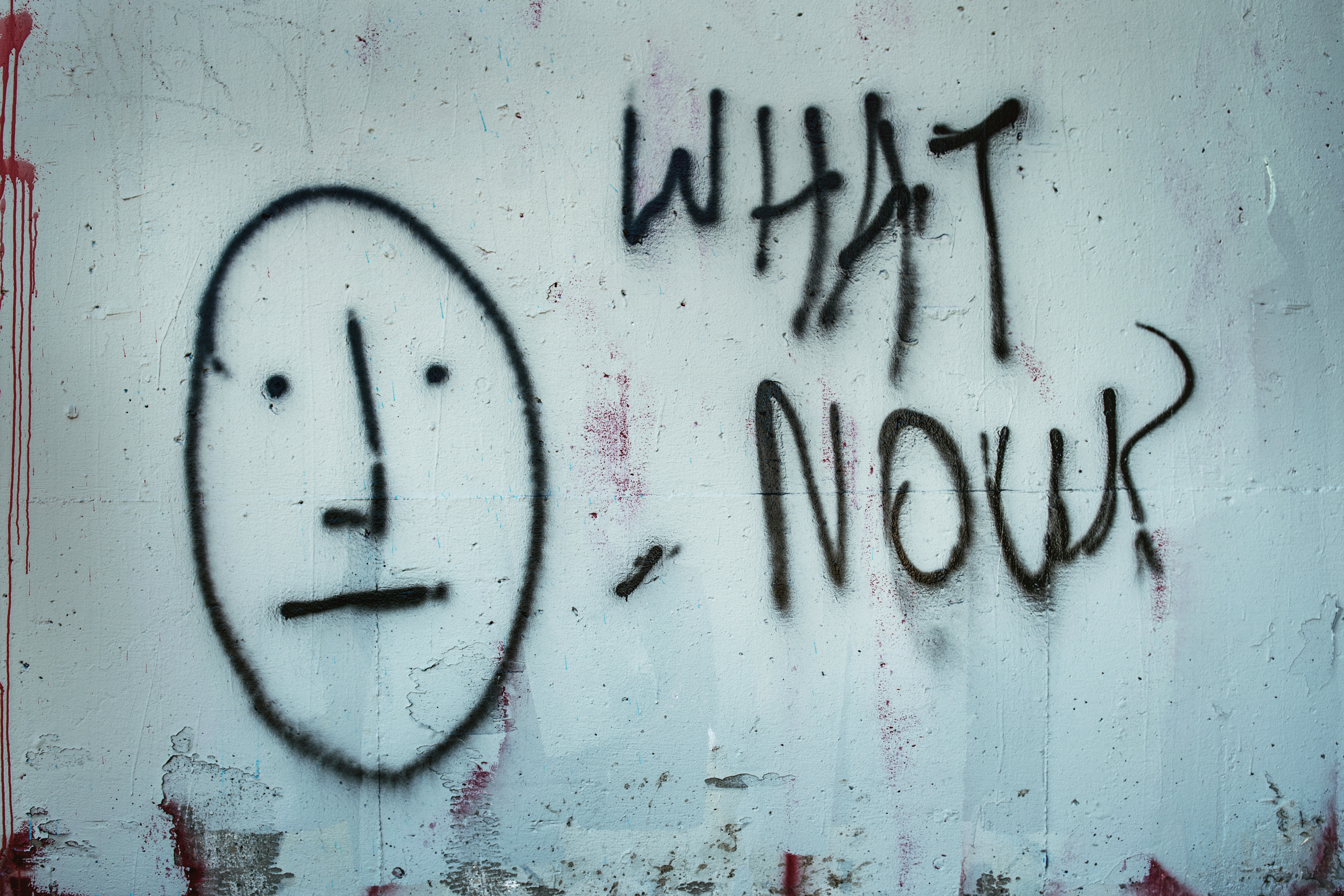
What now?
I’m not going to lie, these elections have left me feeling rather depressed. Instead of tackling the deep structural changes this country – and the world – desperately needs, the future government coalition will defend the status quo by any means necessary. As a result, social disparities will widen further which will drive even more people into the arms of the far right.
There is also no way around acknowledging that our election system is completely broken. Nearly half of the country is not even allowed to participate in national elections. There are even fewer women in this Chamber than in the last. I’m sorry but no one who lives in Luxembourg can look at this parliament, which is largely male and largely white, and actually think that this is in the least way representative of the country we are in. It is fucked up that so many seem content to just accept this situation.
I feel that there are two things we as progressives must understand. First, we must give up the illusion of Luxembourg as a fundamentally progressive country. Luxembourg has at its core always been conservative – I mean, the national motto is literally “We want to stay what we are” for heaven’s sake.
While this stance may have worked out for some (real strong emphasis on “some” here) for the longest time, Luxembourg will be forced to change one way or another by the world it finds itself in. Time is running out, but those of us who believe that a better world is possible must never stop advocating for it. But we also must realise that it will be – and has always been – an uphill battle.
Secondly, the fact that the Chamber of Deputies now has three parties left of centre in the opposition offers the opportunity to start building a strong dissident voice against the conservative neoliberal policies to come. The Green Party has already hinted at the fact that they might form a technical group with the Left Party, and I truly hope that petty technicalities will not stand in the way of that. And who knows, maybe the Luxembourg Socialist Workers’ Party (LSAP) will even find some time to look up what the words in its name actually mean.
All jokes aside though, it is an old cliché that leftists constantly argue with each other. Put ten of us in a room and at the end of the evening, you’ll likely end up with ten different ideological movements. To be honest, I’ve always considered this as a major perk. Contrary to the right, people on the left generally appreciate arguments and debate. They love to question, poke and prod at anything and everything. However, there is no denying that the inquisitive nature (and the deep justice sensitivity) that so many of us share often prevents us from coming together as a united front.
In times when we find ourselves increasingly isolated, whether through circumstances or political action, we need to return our focus to unity. Because whichever way you turn it, there is always more that unites us than separates us.


